The High Cost of Memory
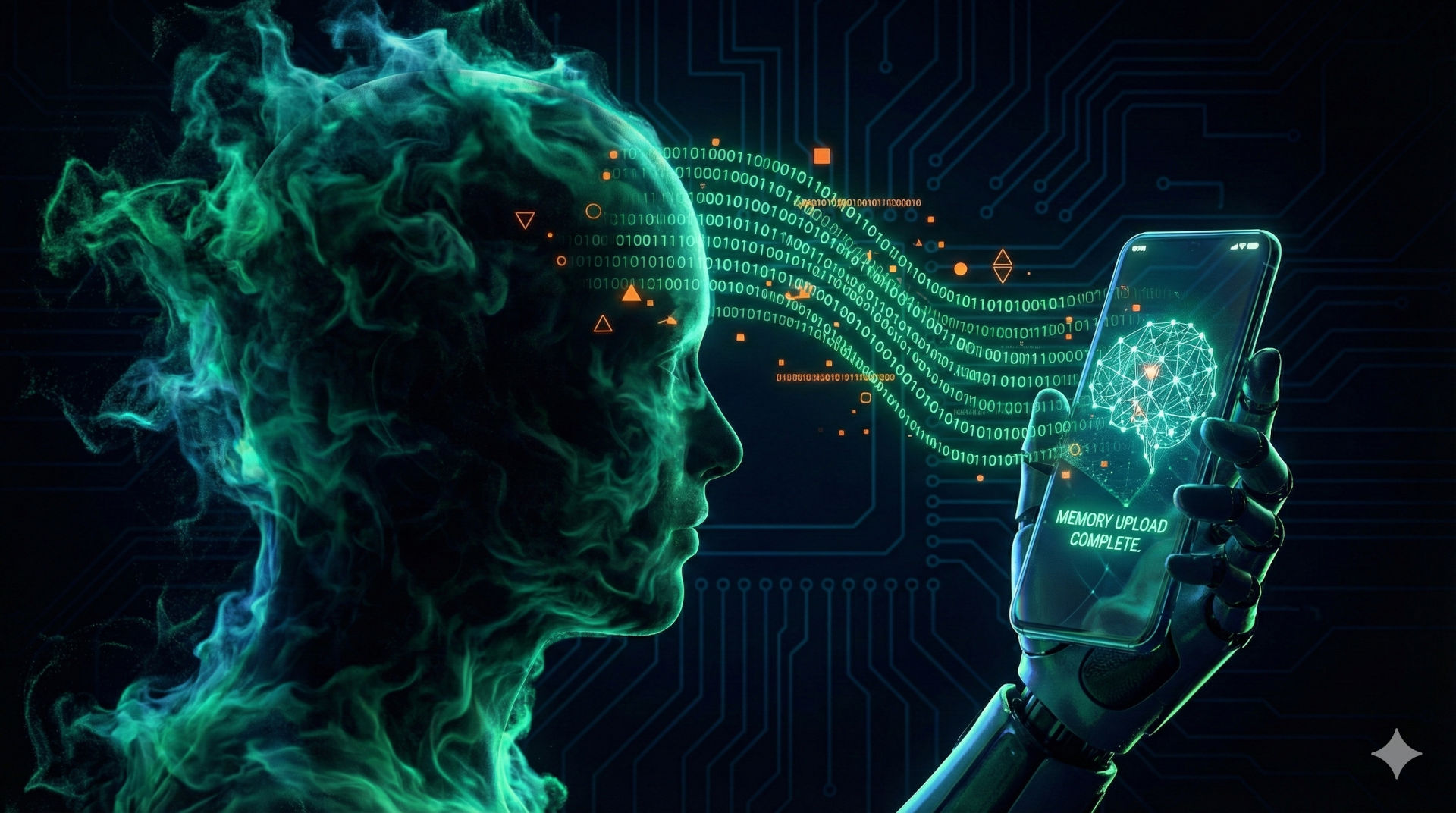
Cognitive Offloading: Examining the migration of memory from biological brains to digital devices.
The Convenience Trap: Questioning whether the ease of digital reliance leads to the atrophy of our innate cognitive skills.
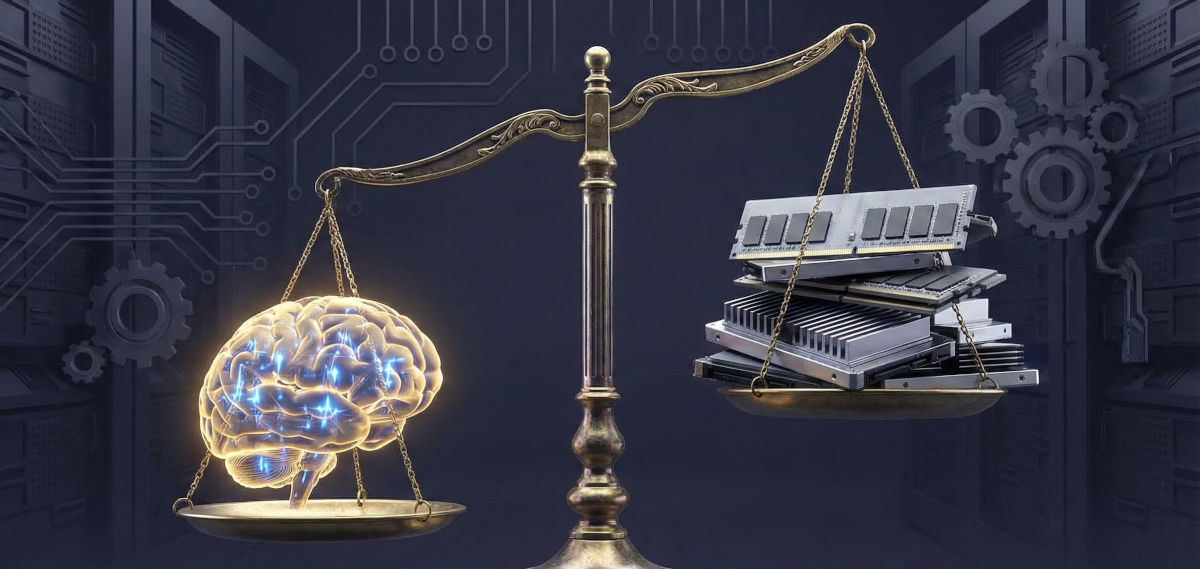
Biological Benchmark: Highlighting the human brain’s vast, ~2.5 Petabyte capacity, an internal hard drive we are increasingly bypassing.
Introduction
When the global surge in RAM and SSD prices began, it reminded me of one of my speculations about a critical issue: how we start delivering our memory to digital devices. While the market hits by increasing hardware costs, a more subtle shift is occurring in how we interact with these devices—and what it costs us as humans.
How it started
Consider the analog era. We had wired phones and physical phonebooks. We stored frequently used phone numbers to biological memory and archived the rest on paper. When cellular phones introduced digital phonebooks, we began the great migration: transferring our knowledge from the mind to the device.
The Interaction Shift
This was the turning point. We started interacting with digital devices in a deeply personal way. Calendars saves our dates (birthdays, anniversaries…) and alarm reminds us to do something. When the internet merged with mobile technology and creation of the “smartphone,” we silently transferred entire segments of our lives into this small pocket device.
Today, our every day life is organized in this digital box. Weather, communication, news, interests and entertainment are now posted on notifications.
Potential Catastrophy
Ask yourself: “What will happened if I lose my phone?” Is “Everything is there, my whole life!” the answer you get first?
And luckily there is a backup on cloud. Maybe…
The Era of Co-Existence
In recent years, this integration has deepened. AI assistants (both local and cloud-based) now manage complex workflows: summarizing news, drafting emails, assisting with homework, all that following our habits, styles and interests. We are witnessing the dawn of an era where humans and AI live in symbiosis, but with a small catch: AI is beginning to think for us… and act like we are.
The Price of Convenience
Simple thinking processes (replying to messages, deciding what to cook, or locating a shop) are becoming automated. We have formed a rapid habit of “querying the device” rather than reling to our knowledge.
This unquestionably eases our lives, but we must ask: Does this convenience lead to cognitive atrophy?
- MIT Study reported that “excessive reliance on AI-driven solutions” may contribute” to “cognitive atrophy” and shrinking of critical thinking abilities.
Will it make our brains “lazy”?
- Maybe, we rather click than think.
The Biological Benchmark
Let’s look into the “hardware” we were born with, our brain. Stanford researchers and Salk Institute studie estimate that the brain’s storage capacity is amazing.
While the cerebral cortex alone has 125 trillion synapses while 1 synapse can store 4.7 bits of information it holds roughly 74 Terabytes (TB) of data, the complete system capacity, considering the entire neural network, is estimated to 2.5 Petabytes(PB).
To put that in perspective: 2.5 Petabytes is 2,500 Terabytes.
// SYSTEM_SPEC_COMPARISON
| Hardware | Capacity | Status |
|---|---|---|
| Server RAM DDR5 | 32 GB | ACTIVE |
| Server SSD, 2.5in | 1.9 TB | ACTIVE / FULL |
| Cerebral Cortex | 74 TB | IDLE |
| Total Brain System | 2,500 TB | OFFLINE |
The price of this Server SSD, today, is $1,275. To build a reliable data storage RAID 10 is a standard, that mean that we need 4 SSD to get 3.8TB. The final price will be 4 x $1,275 = $5,100 !
The price of this Server RAM DDR5 6400, today, is arroun $1,000!
We possess an immense, built-in biological data center. But, we are increasingly bypassing this massive internal capacity to external drives.
Conclusion
To answer the original question: Why is memory too expensive?
Perhaps it is because we are no longer just buying hardware. We are buying a substitute for our own cognitive processes. Our brain activities are being transferred to machines that now do the thinking for us.
Artifact Resources
- MIT: Your Brain on ChatGPT: Accumulation of Cognitive Debt when Using an AI Assistant for Essay Writing Task
- Stanford: New imaging method developed at Stanford reveals stunning details of brain connections
- Salk Institute: Synaptic Information Storage Capacity Measured With Information Theory
- GitHub: The codes for algorithms used in study “Synaptic Information Storage Capacity Measured With Information Theory”